
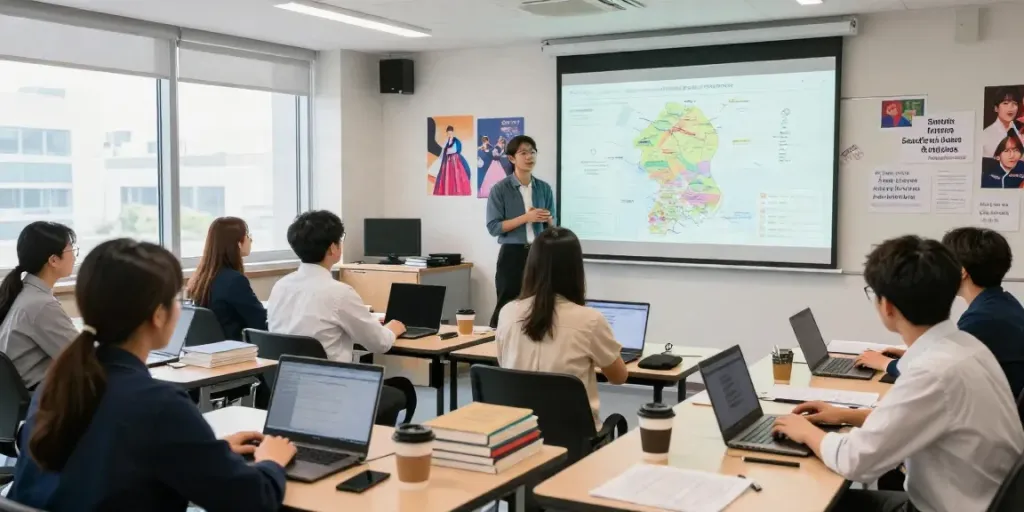
Overview of du hoc han quoc
Studying abroad in South Korea, commonly referred to as du hoc han quoc, has witnessed a surge in interest among international students, especially in recent years. As the global education landscape evolves, South Korea has emerged as a top destination due to its advanced educational system and rich cultural heritage. This article aims to provide comprehensive insights into the requirements, costs, and application processes related to studying in South Korea in 2027.
What is du hoc han quoc?
Du hoc han quoc refers to the pursuit of higher education in South Korea, encompassing various academic programs from language studies to advanced degree courses. The appeal lies in the high-quality education provided by renowned institutions, coupled with the opportunity to immerse oneself in a culture rich in history and modern technological advancements.
Benefits of studying in South Korea
South Korea offers numerous advantages for international students, including:
- Quality Education: South Korean universities are consistently ranked among the top globally, particularly in fields such as technology, engineering, and natural sciences.
- Cultural Experience: Living in South Korea provides an invaluable opportunity to learn about its unique culture, language, and traditions.
- Cost-Effective: Compared to Western countries, the cost of living and tuition fees in South Korea are relatively lower while still providing high-quality education.
- Job Opportunities: With an increasing number of international companies setting up in South Korea, students have access to ample internship opportunities and potential job placements post-graduation.
Current trends in international education in 2026
As we move into 2026, several trends are shaping the landscape of international education in South Korea:
- Increased Programs in English: More institutions are offering programs taught in English to attract international students who may not be proficient in Korean.
- Diverse Scholarship Opportunities: South Korea has expanded its scholarship programs, including the Global Korea Scholarship (GKS), which aims to reduce financial barriers for international students.
- Focus on STEM Education: South Korea continues to emphasize STEM (Science, Technology, Engineering, and Mathematics) education, drawing global talent in these critical areas.
Popular Study Pathways
Common routes to study in South Korea
International students can choose from various pathways to study in South Korea:
- Language Programs: Students often start with Korean language programs before transitioning to degree programs. These programs improve language proficiency and ease cultural integration.
- Undergraduate and Graduate Programs: Universities offer a range of degree programs, from undergraduate to master's and doctoral levels, in various fields including humanities, science, and business.
Language programs and their importance
Language programs are crucial for international students as they provide a solid foundation in the Korean language, which is essential for academic success and daily life. Programs often range from 6 months to 2 years, depending on the student’s proficiency level and academic goals.
Transitioning to university programs
After completing a language program, students are eligible to transition to university degree programs. This seamless pathway ensures that students are well-prepared to meet the academic demands of their chosen fields. Students must achieve a minimum level of Korean proficiency, often evidenced by the TOPIK (Test of Proficiency in Korean) results.
Costs and Financial Planning
Tuition fees for various programs
Tuition fees in South Korea vary depending on the institution and program of study. On average:
- Language Programs: Tuition ranges from 1,400,000 to 1,950,000 KRW per semester (approximately 27,000,000 to 38,000,000 VND).
- Undergraduate Programs: Tuition fees are typically 3,000,000 to 8,000,000 KRW per year (approximately 55,000,000 to 148,000,000 VND), depending on whether the university is public or private.
- Graduate Programs: Fees can range from 4,000,000 to 10,000,000 KRW, with additional costs for specialized courses.
Living expenses in South Korea
Living expenses can vary but are generally estimated at:
- Accommodation: 200,000 to 500,000 KRW per month depending on the type of housing.
- Food: 200,000 to 300,000 KRW per month for basic groceries and meals.
- Transportation: Monthly public transport costs are around 50,000 to 100,000 KRW.
Scholarship opportunities for international students
To alleviate the financial burden, various scholarship opportunities exist for international students:
- Global Korea Scholarship (GKS): Full tuition coverage, living expenses, and a round-trip airfare.
- University-Specific Scholarships: Many universities offer merit-based scholarships that can cover up to 100% of tuition fees.
Visa Requirements and Application Process
Types of student visas: D-4-1 and D-2
Two primary student visa types are available for international students in South Korea:
- D-4-1 Visa: For language programs and non-degree courses.
- D-2 Visa: For degree-seeking students (undergraduate and graduate).
Step-by-step visa application guide
The visa application process involves several key steps:
- Choose your institution and program.
- Gather required documents, including proof of admission, financial stability, and health insurance.
- Submit the application at the nearest South Korean embassy or consulate.
- Receive your visa and prepare for departure.
Common mistakes to avoid during the application
Students should be mindful of common pitfalls, such as:
- Missing documentation or incorrect information.
- Not understanding financial requirements adequately.
- Failing to apply well in advance of the intended start date.
Cultural Adaptation and Daily Life in South Korea
Understanding South Korean culture
Adapting to South Korean culture requires an understanding of its values and social norms. Respect for hierarchy, collectivism, and politeness are central to daily interactions. International students are encouraged to engage with local customs to integrate smoothly.
Essential tips for daily life in South Korea
To navigate life in South Korea effectively, consider the following tips:
- Learn Basic Korean: Even basic language skills can greatly enhance daily interactions.
- Understand Public Transport: Familiarize yourself with the subway and bus systems, which are extensive and user-friendly.
- Participate in Campus Activities: Getting involved in clubs or events can create a support network and enhance your educational experience.
Building a support network as an international student
Establishing connections with fellow international students as well as local Koreans can be immensely beneficial. Joining cultural associations or international student groups can provide support, friendship, and valuable insights into living in South Korea.
What are the cultural norms you should know?
Understanding cultural norms is crucial for successful integration. Key norms include:
- Greeting elders with respect, often with a bow.
- Understanding the significance of group harmony and avoiding confrontation.
- Observing dining etiquette, such as waiting for the eldest to start eating.
How to handle homesickness while abroad?
Feeling homesick is common among international students. To cope, consider:
- Staying connected with family and friends back home through regular communication.
- Engaging in local cultures and practices to divert attention and foster new friendships.
- Participating in activities that bring joy and fulfillment.